ERP Integration for Business Systems
ERP integration connects ecommerce with the systems that run finance, supply chain, manufacturing, and
operations. We integrate with ERP systems such as Oracle NetSuite, NetSuite, Microsoft Dynamics, Infor, and
other platforms. This gives teams accurate product, pricing, inventory, and order data across business
systems. The outcome is less manual entry, fewer errors, and faster order fulfillment.
Oracle NetSuite, NetSuite, and Microsoft Dynamics
We connect to Oracle NetSuite and NetSuite to synchronize customers, inventory, orders, and financial
records. We also integrate Microsoft Dynamics for organizations that rely on its ERP and CRM capabilities.
These connections help enterprise teams maintain a single source of truth, improve reporting, and support
complex workflows without disrupting existing operations.
Infor and ERP Integration Features
Infor and other ERP integration features help companies modernize without abandoning legacy software too
quickly. We use middleware and API-driven connections to bridge older systems with the ecommerce platform.
This protects prior investments, extends useful life, and creates a phased path toward a more connected,
automated, and data-driven commerce environment.
Product Catalog and Catalog Management
A well-structured product catalog is essential for conversion, search, and operational accuracy. Our
catalog management capabilities help teams organize categories, attributes, variants, pricing rules, and
product relationships. Whether you manage thousands of SKUs or a complex B2B catalog, we create a product
catalog that is easy to maintain, easy to search, and ready for multiple sales channels.
Unlimited Catalogs and Multiple Products Manager
With unlimited catalogs, the multiple products manager, and flexible data models, teams can manage diverse
assortments without being constrained by rigid templates. This is valuable for vendor, marketplace, and
Amazon-style business models where product sources and fulfillment rules vary. Administrators can control
visibility, pricing, and availability across regions and customer segments.
Merchandising Tools for Wholesale Distributors
Merchandising tools help wholesale distributors present products strategically to B2B buyers. Features such
as custom catalogs, quick order pads, contract pricing, and account-specific assortments improve the online
storefront. These tools make it easier for buyers to find what they need, compare options, and complete
large orders accurately.
Inventory and Warehouse Management
Inventory and warehouse management are central to ecommerce reliability. We help synchronize stock levels,
locations, backorders, and fulfillment rules between the storefront and backend systems. This ensures
customers see accurate availability and operations teams can plan picking, packing, and shipping with
confidence. Better inventory control reduces overselling and improves order fulfillment.
Inventory Management and Warehouse
Our inventory management and warehouse capabilities support real-time visibility across warehouses,
dropship vendors, and retail locations. Teams can track inventory, set reorder points, manage transfers, and
prioritize web orders. When inventory data flows correctly, the business can make faster decisions, reduce
carrying costs, and deliver a more dependable customer experience.
Intelligent Shopping Cart and Online Storefront
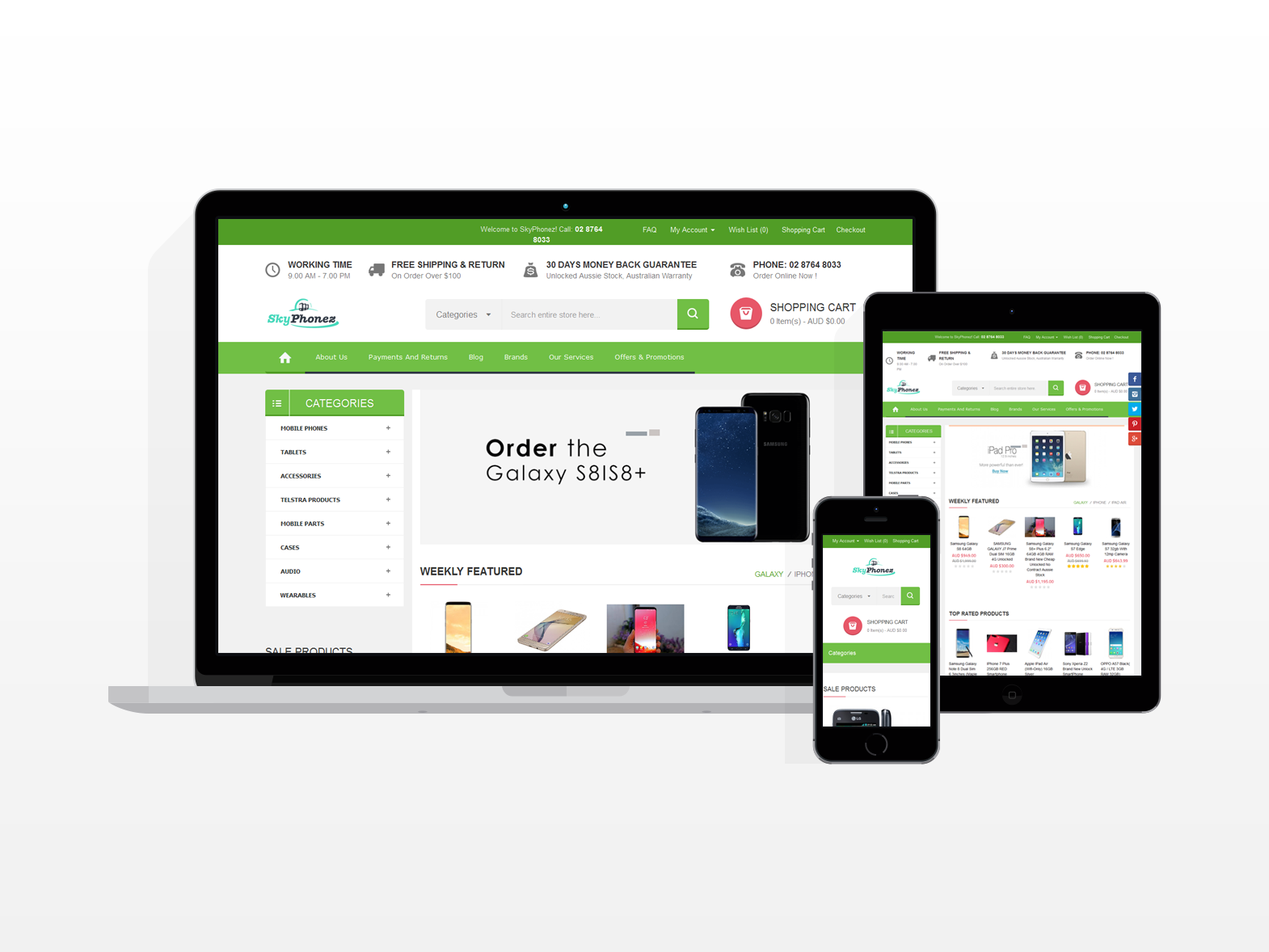
The intelligent shopping cart improves the buying journey with personalized pricing, saved carts, quick
reorder, and clear order summaries. Combined with a fast online storefront, these features help B2B buyers
and consumers complete purchases with less effort. A reliable ecommerce platform should make every step
intuitive, from product discovery to checkout and post-purchase account management.
B2B Buyers and Vendor Marketplace
B2B buyers often need complex purchasing tools, including approval limits, purchase orders, tax exemption
handling, and account-specific catalogs. We also support vendor and marketplace models where multiple
sellers, including Amazon-style vendors, list products. This flexibility helps businesses expand assortments
without losing control over pricing, service, or brand experience.
Cloud Infrastructure and Technology Stack
Our cloud infrastructure is designed for performance, security, and resilience. We build on a standard
technology stack that can include enterprise cloud services, containerization, and automated deployment
practices. This approach supports a reliable ecommerce platform that can scale during peak demand while
maintaining the stability enterprise customers expect from mission-critical systems.
Amazon Web Services, Amazon EC2, and EC2 Spot
Amazon Web Services provides a proven foundation for scalable commerce. We leverage Amazon EC2 for flexible
compute capacity and EC2 Spot for cost-efficient workloads where interruption tolerance allows. This
combination helps optimize price and performance while supporting development, testing, and production
environments with greater elasticity and control.
Google Compute Engine, Google Cloud Services, and Google Cloud Marketplaces
Google Compute Engine and Google Cloud Services give teams additional infrastructure options for global
reach and high availability. We also consider Google Cloud Marketplaces for deployment and procurement
workflows. By matching workloads to the right cloud services, businesses can improve resilience, simplify
operations, and control infrastructure spending.
Red Hat Enterprise Linux and Compliant Data Center
We use Red Hat Enterprise Linux and other hardened technologies to support secure, stable operations. For
organizations with strict requirements, we design toward a compliant data center environment and a standard
technology stack that meets internal governance policies. This helps protect customer data, maintain uptime,
and satisfy industry regulations.
Enterpristore Performance Edge
Enterpristore Performance Edge is our approach to optimizing speed, reliability, and scalability across the
commerce ecosystem. It combines infrastructure tuning, caching, monitoring, and integration efficiency. The
goal is to deliver a responsive experience even during high traffic, while giving administrators the
analytics and control needed to improve continuously.
Price and Performance
Price and performance must be balanced carefully. We evaluate compute options such as Amazon EC2, EC2 Spot,
and Google Compute Engine to match cost efficiency with service-level needs. The result is an infrastructure
strategy that avoids overspending while still delivering the speed, uptime, and capacity required for
business growth.
Ready Integration Platform and Live Production Platform
A ready integration platform reduces the time and risk involved in connecting ecommerce to ERP, CRM, PIM,
and other systems. We design, test, and deploy through a live production platform with monitoring, rollback
plans, and data validation. This ensures ERP integration, middleware, and business systems work together
reliably from day one.
Service Portal and Customer Support
A service portal gives customers a structured way to request help, track issues, and access knowledge
resources. Integrated with help desk and ticketing support, it improves response times and creates a clear
record of every interaction. This support model strengthens trust and helps teams resolve problems before
they affect retention or revenue.
Analytics and Business Intelligence
Analytics and business intelligence turn commerce data into actionable insight. We help teams monitor
sales, inventory, web orders, customer behavior, and operational performance. With reliable reporting,
decision-makers can identify trends, optimize merchandising, improve inventory management, and uncover new
opportunities for business growth.
Alternatives to Magento and Adobe Commerce
Many businesses compare alternatives to Magento and Adobe Commerce when seeking a more tailored or
cost-effective solution. Our platform can serve as a reliable ecommerce platform with flexible tools,
integrations, and enterprise features. We help teams evaluate their needs and migrate from legacy software
or rigid systems to a more adaptable commerce environment.
Contact Us
Contact us today to discuss your custom development needs and take your ecommerce platform to the next
level. Whether you need B2B ecommerce functionality, cloud infrastructure, enterprise features, Infor
connectivity, or a fully integrated online storefront, Enterpristore Ecommerce can transform your vision
into reality. Let us help you build a powerful, user-friendly platform that sets your business apart.

 English
 Afrikaans
 Albanian
 Amharic
 Arabic
 Armenian
 Azerbaijani
 Basque
 Belarusian
 Bengali
 Bosnian
 Bulgarian
 Catalan
 Cebuano
 Chichewa
 Chinese (Simplified)
 Chinese (Traditional)
 Corsican
 Croatian
 Czech
Czech Danish
 Dutch
Dutch English
 Esperanto
 Estonian
 Filipino
 Finnish
 French
 Frisian
 Galician
 Georgian
 German
 Greek
Greek Gujarati
 Haitian Creole
 Hausa
Hausa Hawaiian
 Hebrew
 Hindi
Hindi Hmong
Hmong Hungarian
 Icelandic
 Igbo
Igbo Indonesian
 Irish
Irish Italian
 Japanese
 Javanese
 Kannada
 Kazakh
 Khmer
Khmer Korean
 Kurdish (Kurmanji)
 Kyrgyz
 Lao
Lao Latin
Latin Latvian
 Lithuanian
 Luxembourgish
 Macedonian
 Malagasy
 Malay
Malay Malayalam
 Maltese
 Maori
Maori Marathi
 Mongolian
 Myanmar (Burmese)
 Nepali
 Norwegian
 Pashto
 Persian
 Polish
 Portuguese
 Punjabi
 Romanian
 Russian
 Samoan
 Scottish Gaelic
 Serbian
 Sesotho
 Shona
Shona Sindhi
 Sinhala
 Slovak
 Slovenian
 Somali
 Spanish
 Sudanese
 Swahili
 Swedish
 Tajik
Tajik Tamil
Tamil Telugu
 Thai
Thai Turkish
 Ukrainian
 Urdu
Urdu Uzbek
Uzbek Vietnamese
 Welsh
Welsh Xhosa
Xhosa Yiddish
 Yoruba
 Zulu
Zulu